
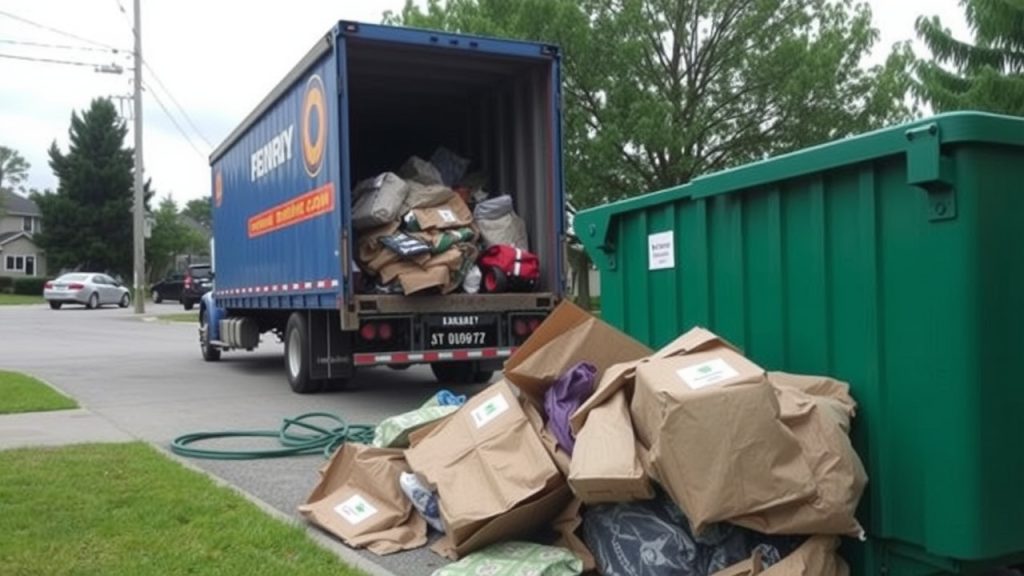
When tackling home projects, dumpster safety is often overlooked. It’s easy to underestimate the risks involved, but ignoring safety measures can lead to accidents. Wearing the right gear and following proper loading techniques are essential. You might think it’s just a simple task, but there are several important factors to keep in mind that could save you and your community from potential harm. Let’s explore what you need to know to stay safe.
Key Takeaways
- Always wear appropriate safety gear, including gloves, safety glasses, and steel-toed boots, to protect against injuries while handling materials.
- Load heavier items first and distribute weight evenly to prevent tipping and ensure safe transportation.
- Research and comply with local regulations regarding dumpster permits, placement, and prohibited materials to avoid fines.
- Maintain clear pathways around the dumpster to facilitate access and prevent accidents for pedestrians and vehicles.
- Secure the dumpster with locks and consider labeling it to prevent unauthorized access and inform others about its contents.
Why Dumpster Safety Matters for Home Projects
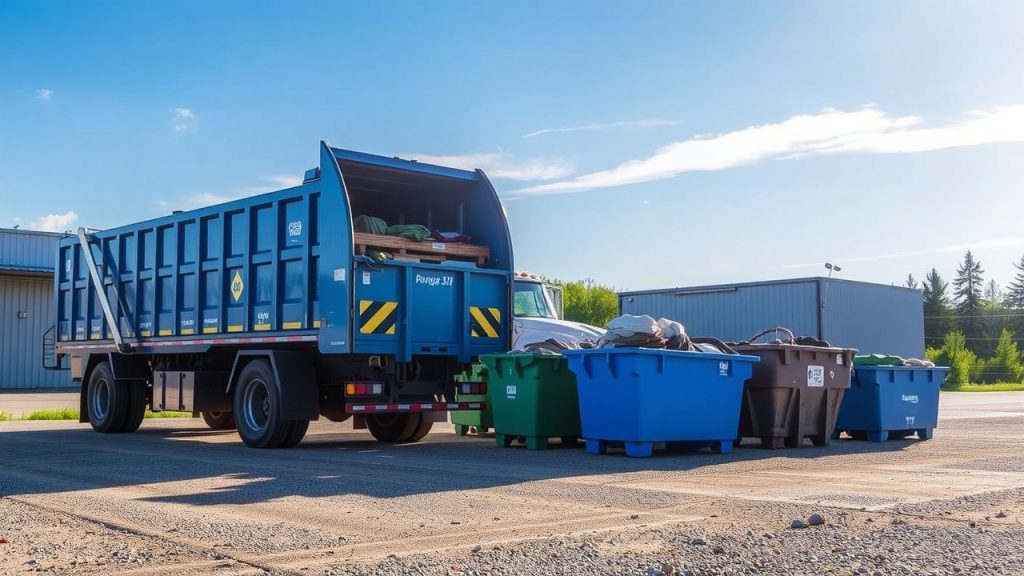
When you tackle home projects, understanding dumpster safety is vital because it helps prevent accidents and injuries.
Dumpster etiquette is important for guaranteeing that everyone in your community stays safe and has access to the resources they need. By following proper guidelines, you not only protect yourself but also respect your neighbors and their property.
When using a dumpster, always load it correctly—don’t overfill it or leave hazardous materials exposed. This way, you minimize the risk of injuries for yourself and others.
Remember, maintaining clean and organized surroundings reflects your community responsibility.
Additionally, be mindful of where you place the dumpster. Make sure it doesn’t block sidewalks or driveways, as this can create safety hazards for pedestrians and vehicles.
Essential Safety Gear for Dumpster Loading
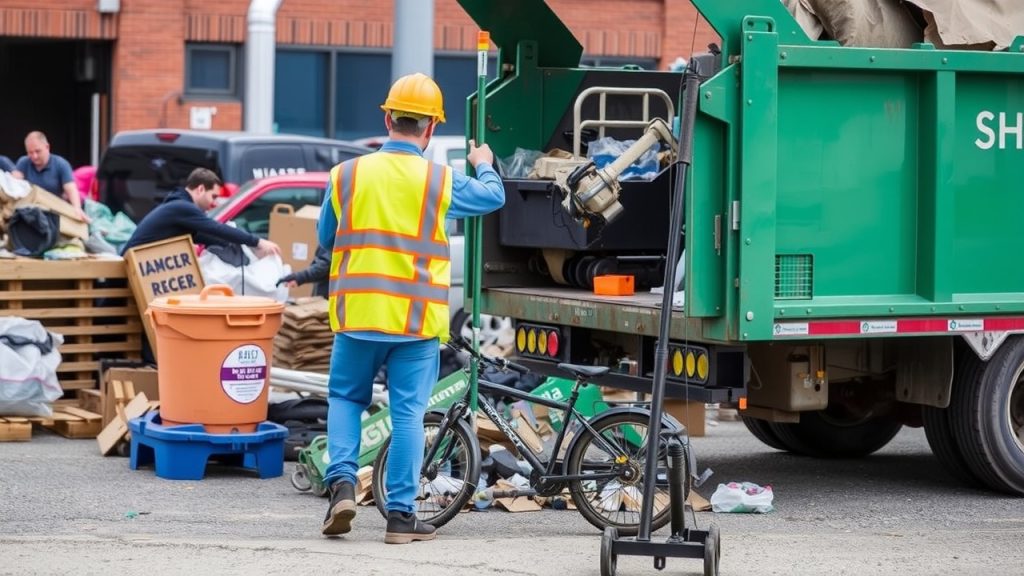
When loading a dumpster, wearing the right safety gear is vital to protect yourself.
You’ll want to equip yourself with gloves for hand protection, safety glasses for visibility, and steel-toed boots for your feet.
These essentials can help prevent injuries and guarantee a smoother loading process.
Gloves For Hand Protection
Gloves are an essential piece of safety gear when loading dumpsters, providing crucial protection for your hands.
When choosing gloves, consider various glove types tailored for different tasks. For instance, heavy-duty work gloves are perfect for handling sharp or rough materials, while rubber gloves can protect against chemicals or wet conditions. Look for gloves that offer a snug fit to guarantee you maintain dexterity while working.
Additionally, reinforced fingertips and palms can enhance durability, making your hand protection even more effective. Don’t forget to inspect your gloves regularly for wear and tear, as damaged gloves won’t provide the safety you need.
Safety Glasses For Visibility
Safety glasses are a must-have when loading dumpsters, as they protect your eyes from flying debris, dust, and other hazards.
Using protective eyewear not only shields your eyes but also enhances visibility, allowing you to spot potential dangers more effectively. When you’re handling heavy or sharp materials, every bit of clarity counts.
Make sure your safety glasses fit comfortably and provide a wide field of view. Consider options with anti-fog and scratch-resistant features for peak performance.
Steel-Toed Boots For Footwear
Choosing the right footwear is essential for your safety while loading dumpsters, and steel-toed boots should be at the top of your list.
These boots offer several key advantages that highlight the footwear’s importance in hazardous environments.
- Protection: Steel-toed boots shield your feet from heavy objects that may fall or roll.
- Durability: They’re built to withstand tough conditions, ensuring long-lasting use.
- Comfort: Many models provide cushioning and support, making it easier to stay on your feet for extended periods.
Investing in steel-toed boots not only enhances your safety but also grants you peace of mind while working.
Proper Loading Techniques to Prevent Accidents
While loading a dumpster might seem straightforward, following proper techniques can considerably reduce the risk of accidents. Safe loading isn’t just about tossing items in; it’s about how you distribute weight for stability. Here are some essential tips:
| Tip | Description | Why It Matters |
| Load Heavier Items First | Place heavier items at the bottom. | This helps maintain balance. |
| Spread Out Weight | Distribute items evenly across the dumpster. | Prevents tipping and shifting. |
| Secure Loose Items | Use straps or tarps for unstable materials. | Reduces the risk of falling debris. |
| Avoid Overloading | Stay within the dumpster’s limits. | Guarantees safe handling and transport. |
Understanding Weight Limits for Your Dumpster
Understanding the weight limits of your dumpster is essential for guaranteeing a smooth disposal process. Exceeding these limits can lead to safety hazards and potential fines.
To maintain dumpster stability, you must pay attention to how you distribute the weight of your load.
Here are a few tips to keep in mind:
- Know your dumpster’s weight capacity: Different sizes have varying limits; make sure you’re aware of yours.
- Distribute weight evenly: Avoid placing all heavy items on one side to prevent tipping or damage.
- Monitor your load: Regularly check your dumpster to make certain you’re not exceeding the weight limit as you add materials.
Spotting Hazardous Materials Before You Toss Them
Before you toss anything into the dumpster, you need to know what hazardous materials might be lurking in your pile.
Common items like batteries, paints, and chemicals can pose serious risks if improperly disposed of.
Let’s explore how to spot these dangers and the right ways to get rid of them safely.
Identify Common Hazardous Materials
When cleaning out your home, spotting hazardous materials before tossing them in the dumpster is crucial for your safety and the environment.
Many household items can pose risks if not disposed of properly. Here are some common hazardous materials to look for:
- Asbestos-containing materials: If you suspect any, get professional asbestos identification.
- Chemicals: Cleaning supplies, paints, and pesticides require careful chemical disposal.
- Batteries: Don’t forget about battery recycling, as they can leak harmful substances.
Always remember to perform a mold assessment and lead testing in older homes.
If you find any medications, guarantee proper medication disposal.
Knowing these items can help you make responsible choices while cleaning out your space.
Proper Disposal Methods
Although it’s easy to toss items into a dumpster without a second thought, knowing how to dispose of hazardous materials properly can save you from potential health risks and environmental damage.
Before you throw something away, check if it falls under hazardous waste categories like batteries, paints, or chemicals. Familiarize yourself with local recycling guidelines, as many of these materials require special handling.
Instead of tossing them in the dumpster, consider taking them to a designated disposal facility or recycling center. Doing so not only protects your health but also helps keep the environment safe.
How to Secure Your Dumpster Against Theft
Securing your dumpster against theft is essential, especially if you’re storing valuable materials or equipment.
Implementing a few simple strategies can help keep your items safe and deter potential thieves.
- Use dumpster locks: Invest in high-quality locks designed specifically for dumpsters. This adds a layer of protection that can deter unauthorized access.
- Join a neighborhood watch: Connecting with your neighbors can create a sense of community vigilance. Sharing information about suspicious activity can help everyone stay alert.
- Install security cameras: Placing cameras around your property can’t only deter thieves but also provide evidence if a theft occurs.
Safe Dumpster Placement for Easy Access
When placing your dumpster, first assess the available space to guarantee it fits comfortably.
Next, consider how vehicles will access it, making certain there’s enough room for safe maneuvering.
Finally, maintain clear pathways around the dumpster to prevent any accidents or blockages.
Assess Space Availability
To guarantee safe and efficient dumpster placement, you should first assess the available space in your area.
Start by taking precise space measurements to confirm the dumpster fits comfortably without obstructing access points. Look for areas that allow easy entry and exit for both the dumpster and any equipment you may need during your project.
- Check for overhead obstructions like branches or power lines.
- Confirm the ground is level and stable for safe placement.
- Identify any potential hazards, such as nearby traffic or pedestrians.
Consider Vehicle Access
Guaranteeing that vehicles can easily access the dumpster is essential for a smooth workflow during your project. You’ll want to take into account vehicle maneuverability and driveway clearance when choosing a location for your dumpster. This guarantees that delivery and pickup are hassle-free.
| Vehicle Type | Required Maneuverability | Recommended Driveway Clearance |
| Standard Sedan | Low | 10 feet |
| Pickup Truck | Medium | 12 feet |
| Large Delivery Van | High | 15 feet |
Maintain Clear Pathways
Maintaining clear pathways around your dumpster is essential for safe and efficient access during your project. Proper pathway maintenance guarantees you can easily dispose of waste without hindering your progress.
To achieve this, focus on the following:
- Regularly inspect the area: Check for any obstructions that may arise, such as debris or tools.
- Facilitate obstacle removal: Remove any items that can block access, making it easier for you and others to navigate.
- Mark clear routes: Use cones or tape to designate safe paths around your dumpster, alerting others to avoid those areas.
How to Maintain a Safe Work Area Around Your Dumpster
While working near a dumpster, it’s important to keep the area organized and clear of hazards. Start by verifying proper dumpster organization—store tools and materials away from the dumpster to avoid clutter. This not only enhances safety but also improves efficiency as you work.
Make it a priority to maintain workspace cleanliness by regularly removing any debris or waste that accumulates around the dumpster. Create designated zones for loading items, and encourage everyone working nearby to stick to these areas.
If you’re using sharp or heavy items, consider using gloves and other protective gear to minimize the risk of injury. Confirm the dumpster lid is closed when not in use to prevent accidents and keep animals out.
Common Mistakes to Avoid When Loading Your Dumpster
When loading your dumpster, it’s easy to make mistakes that can lead to safety hazards or inefficiencies. Avoiding these common pitfalls will help you maximize space and guarantee safe loading techniques.
- Neglecting Weight Distribution: Always distribute the weight evenly. A lopsided load can cause the dumpster to tip over, creating a safety risk.
- Overloading the Dumpster: Don’t exceed the weight limit or fill it above the rim. This can lead to fines and unsafe transport.
- Improper Item Placement: Place larger, heavier items at the bottom and lighter ones on top. This guarantees stability and makes it easier to access your items when unloading.
Communicating With Neighbors About Your Project
Before you start your project, it’s important to notify your neighbors so they’re aware of what’s happening.
Discuss any potential noise or disruptions, and keep them updated on your project timeline.
This open communication can help maintain good relationships and minimize any concerns.
Notify Before Starting Work
Effective communication is key to maintaining good relationships with your neighbors during any project involving a dumpster.
Before you start your work, take a moment to notify neighbors about your project schedule. This simple step can prevent misunderstandings and foster goodwill.
Here are a few tips to keep in mind:
- Share your timeline, including start and end dates.
- Let them know about any potential changes or delays.
- Offer to answer any questions or concerns they may have.
Discuss Noise and Disruption
Notifying your neighbors about your project schedule is just the first step in ensuring a smooth experience. To make your renovations less disruptive, consider effective noise management strategies. Inform your neighbors about potential noise levels during specific hours, so they’re prepared.
If you expect heavy machinery or demolition, let them know in advance—communication goes a long way. You can also explore options like scheduling noisy tasks at times when most people are out or using quieter equipment when possible.
Showing that you care about disruption mitigation can foster goodwill and understanding. Remember, maintaining open lines of communication will help your project run smoothly and keep your neighborhood harmony intact. A little effort can make a big difference!
Share Project Timeline Updates
Keeping your neighbors informed about your project timeline can greatly reduce misunderstandings and foster a cooperative atmosphere.
Regular update communication is key to maintaining good relationships during your project. Here are some effective ways to keep your neighbors in the loop:
- Share a timeline: Provide a clear outline of your project’s start and finish dates, including any potential delays.
- Notify about disruptions: Inform neighbors ahead of time about any significant noise or disruptions, so they can plan accordingly.
- Provide contact info: Offer your phone number or email for any questions or concerns, showing you’re approachable and considerate.
Understanding Local Regulations for Dumpster Use
Before you rent a dumpster, it’s important to understand the local regulations that govern its use, as failing to comply can lead to fines or project delays.
Each municipality has specific local guidelines that dictate where and how you can place a dumpster. Some areas may require you to obtain a dumpster permit before you set one up, especially if it’s on the street or in a public space.
Each municipality has its own guidelines for dumpster placement, and some may require a permit, especially for public spaces.
Checking with your local waste management authority can provide clarity on the necessary permits and any restrictions. You’ll want to find out if there are size limitations or specific materials you can’t throw in.
Ignoring these rules not only risks penalties but can also disrupt your project. By taking the time to research and understand these regulations, you’ll facilitate a smoother, more efficient experience when using a dumpster.
Preparing for Weather Conditions While Using a Dumpster
As you prepare for your dumpster rental, it’s essential to take into account the weather conditions that may impact your project.
Weather preparedness can make a significant difference in guaranteeing your safety and maintaining the integrity of your work area. Keep an eye on forecasts, and take the necessary storm precautions to avoid potential hazards.
- Secure loose items: Confirm all items around the dumpster are safely stored to prevent them from becoming projectiles during storms.
- Check the forecast: Stay updated on weather changes, especially if rain or high winds are expected.
- Plan for drainage: Position the dumpster where water can drain away, preventing flooding and keeping your area safe.
Safe Handling of Sharp Objects and Heavy Items
When handling sharp objects and heavy items in a dumpster, it’s essential that you wear protective gear to safeguard yourself.
Always use proper lifting techniques to avoid injury, and make sure to secure any sharp objects to prevent accidents.
Wear Protective Gear
While handling dumpsters, it’s important to wear protective gear to safeguard yourself from sharp objects and heavy items.
Following proper safety protocols helps minimize the risk of injury. Here’s what you should consider:
- Heavy-duty gloves: These will protect your hands from cuts and scrapes when handling sharp materials.
- Steel-toed boots: Wearing these can prevent foot injuries from heavy items that may fall or shift.
- Long-sleeved clothing: Protective clothing keeps your skin safe from potential hazards and sharp edges.
Use Proper Lifting Techniques
Mastering proper lifting techniques is essential for safely handling sharp objects and heavy items found in dumpsters.
Start by evaluating the weight and shape of the item before attempting to lift it. Stand close to the object, keeping your feet shoulder-width apart for stability. Bend at your knees, not your back, and grip the item firmly. As you lift, engage your legs, keeping your back straight.
If the item feels too heavy or awkward, don’t hesitate to ask for help or use tools like dollies. Incorporating safety training into your routine will enhance your awareness of potential hazards.
Secure Sharp Objects
Secure sharp objects to prevent injury when handling items in a dumpster. Whether it’s broken glass or sharp metal, improper disposal can lead to serious cuts or punctures.
Make certain you use secure containers for any sharp items before placing them in the dumpster. This not only keeps you safe but also protects sanitation workers.
- Always wrap sharp objects in cardboard or thick paper.
- Use heavy-duty tape to seal containers tightly.
- Label containers clearly to warn others.
When it comes to sharp object disposal, taking these precautions is essential. By being careful and organized, you can guarantee that your dumpster experience is safe and hassle-free.
Safe Disposal of E-Waste in Your Dumpster
When it comes to disposing of electronic waste, many people underestimate the potential hazards involved. E-waste contains harmful substances like lead and mercury, which can harm the environment if not handled properly.
Instead of tossing your old electronics into the dumpster, consider e-waste recycling as a safer alternative. Many communities offer designated drop-off locations for e-waste, ensuring sustainable disposal and protecting our planet.
If you must use your dumpster for e-waste, check local regulations first. Some areas may prohibit electronic items in residential dumpsters.
If allowed, remove any batteries and hard drives to avoid leaks and data breaches. Always label your dumpster to inform others about the contents.
By prioritizing proper disposal methods, you’re not just keeping your home safe; you’re also contributing to a healthier environment.
Safe Practices for Home Renovations With a Dumpster
Proper disposal isn’t just limited to e-waste; it also plays a key role during home renovations.
When you’re tackling a renovation project, practicing good dumpster etiquette is essential to keep your site safe and organized.
Follow these safe practices to streamline your process:
- Plan ahead: Include dumpster rental in your renovation checklist to avoid last-minute scrambles.
- Separate materials: Keep recyclables separate from regular waste; it’s not just eco-friendly but often saves you money.
- Follow weight limits: Be mindful of the dumpster’s weight capacity to prevent overloading, which can lead to additional fees or unsafe conditions.
When to Seek Professional Help for Your Dumpster Needs
While tackling a renovation or cleanup project, you might find that managing a dumpster on your own isn’t as straightforward as it seems. If you’re overwhelmed with the size of the project or unsure about local regulations regarding dumpster rental, it’s a good time to seek professional assistance.
Experienced dumpster rental services can guide you in choosing the right size for your needs, ensuring you don’t overestimate or underestimate your requirements.
Choosing the right dumpster size is crucial; expert rental services can help ensure you meet your project’s needs accurately.
Additionally, if you encounter unique waste materials or hazardous items, professionals can provide the right advice on disposal methods, keeping you compliant with safety regulations.
Don’t hesitate to reach out for help if you feel unsure about loading or scheduling pickups—an expert can streamline the process and prevent potential headaches.
Avoiding Overloading: The Risks Involved
Overloading your dumpster might seem like a way to save time and effort, but it can lead to serious risks. Not only does it create potential hazards, but it also affects the efficiency of your waste removal process.
When you overload, you compromise safe weight distribution, which can cause the dumpster to tip or become unstable. Here are some overloading consequences you should consider:
- Increased risk of injury to yourself or others
- Potential damage to your property or surrounding areas
- Additional fees for exceeding weight limits
To avoid these dangers, always be mindful of your dumpster’s weight capacity.
Distributing weight evenly across the dumpster can help maintain stability and guarantee safe disposal.
Remember, it’s better to take multiple trips than to risk safety by overloading.
Prioritize safety and keep your environment secure by staying within the limits of your dumpster.
Being Aware of Your Surroundings for Enhanced Safety
Maintaining a safe environment goes beyond just managing your dumpster’s weight. It’s vital to be aware of your surroundings to avoid potential accidents.
Situational awareness means keeping an eye on what’s happening around you, especially regarding surrounding hazards. For instance, watch out for pedestrians, pets, or vehicles nearby while you’re loading or unloading your dumpster.
Situational awareness is crucial; always be mindful of pedestrians, pets, and vehicles when loading or unloading your dumpster.
Guarantee your work area is well-lit and free from obstacles. This not only helps you navigate safely but also prevents others from stumbling into your space.
When using tools or lifting heavy items, be mindful of your body positioning and where your hands are.
If you’re working on a busy street, consider using cones or signs to alert drivers and pedestrians.
By staying aware and proactive, you can greatly reduce the risk of accidents and guarantee a safer experience for everyone involved.
Frequently Asked Questions
Can I Place My Dumpster on the Street Without a Permit?
You can’t place your dumpster on the street without a permit. Check your local street regulations to guarantee compliance. Not following the rules could lead to fines or removal, so it’s best to verify first.
What Types of Materials Are Prohibited in Dumpsters?
You can’t throw hazardous materials or prohibited items in dumpsters. This includes chemicals, batteries, appliances, and certain electronics. Always check local regulations to guarantee you’re disposing of waste safely and legally.
How Do I Choose the Right Dumpster Size for My Project?
To choose the right dumpster size, assess your project requirements and consider the dumpster dimensions. If you’re unsure, opt for a larger size; it’s easier to avoid overfilling than to deal with an overflow situation.
What Should I Do if My Dumpster Is Damaged?
If your dumpster’s damaged, contact the rental company right away for repair options. They’ll assess the situation and guide you on what to do next, ensuring your project stays on track and safe.
Are There Any Specific Safety Regulations for Commercial Dumpster Use?
Yes, there are specific commercial regulations regarding dumpster use. You should follow local dumpster guidelines, ensuring proper placement, weight limits, and maintenance. Adhering to these rules helps maintain safety and compliance for your business operations.
Final Thoughts
By keeping dumpster safety in mind from the start, you can protect yourself, your property, and your community on every home project. Wearing the right protective gear, loading items properly, staying within weight limits, and keeping an eye out for hazardous materials all help prevent accidents. When you avoid overloading the container and stay aware of your surroundings, you make the entire cleanup process smoother, safer, and more efficient.
If you’re planning a cleanout, renovation, landscaping project, or construction job in Sterling Heights or the surrounding areas, working with a professional dumpster provider can make safe disposal much easier. Sterling Heights Dumpster Rental offers a full range of options—including roll-off dumpsters, residential dumpsters, commercial dumpsters, and construction dumpsters—so you can choose the right container while following these safety best practices.
Ready to put these tips into action for your next project? Reach out to our local Sterling Heights dumpster rental team to get expert guidance and a properly sized dumpster, or request a quote through our services page or contact form. Sterling Heights Dumpster Rental is here to provide safe, convenient, and affordable solutions so you can focus on getting the job done right.