
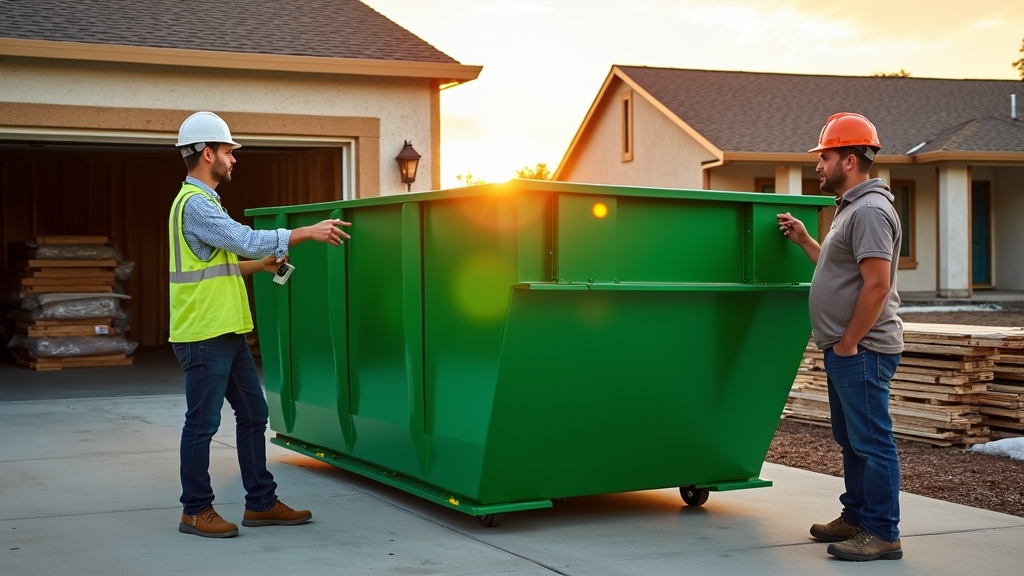
Many misconceptions surround dumpster rentals that can impede effective waste management. Common myths include the belief that renting is too expensive, that all dumpsters are the same size, and that any type of waste can be disposed of in them. Other prevalent myths involve the necessity of permits, perceived limitations to construction use, and incorrect assumptions about rental processes and company policies. Understanding these myths can clarify the dumpster rental process and reveal their true versatility. More insights await on this topic.
Key Takeaways
- Renting a dumpster is cost-effective, as it saves time and fuel compared to multiple landfill trips.
- Dumpsters come in various sizes, ensuring you select the right fit for your project needs.
- Not all items can be disposed of in a dumpster; hazardous materials are often prohibited.
- Many municipalities require permits for dumpster placement on public property to avoid fines.
- Dumpsters are versatile and useful for various projects beyond construction, including home renovations and cleanouts.
Myth 1: Renting a Dumpster Is Too Expensive
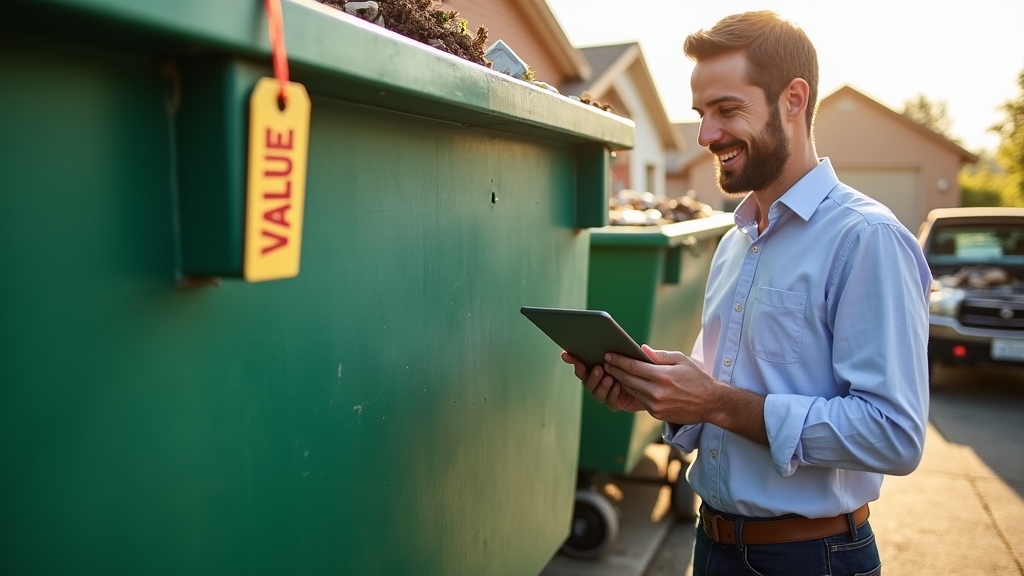
Although some may perceive dumpster rental as a costly endeavor, this myth often overlooks the value it provides regarding convenience and efficiency.
Renting a dumpster can streamline waste management, allowing for a centralized disposal solution during projects such as renovations or cleanouts. By eliminating the need for multiple trips to a landfill, individuals save both time and fuel costs.
Renting a dumpster simplifies waste management, offering a convenient solution that saves time and reduces fuel expenses.
Moreover, the potential financial repercussions of improper waste disposal—such as fines—can far exceed the rental expense. Additionally, dumpster rental companies offer various sizes and rental periods, ensuring options that fit diverse budgets and requirements.
Ultimately, when considering project scope, convenience, and compliance with waste regulations, the costs associated with renting a dumpster may prove to be a judicious investment.
Myth 2: All Dumpsters Are the Same Size
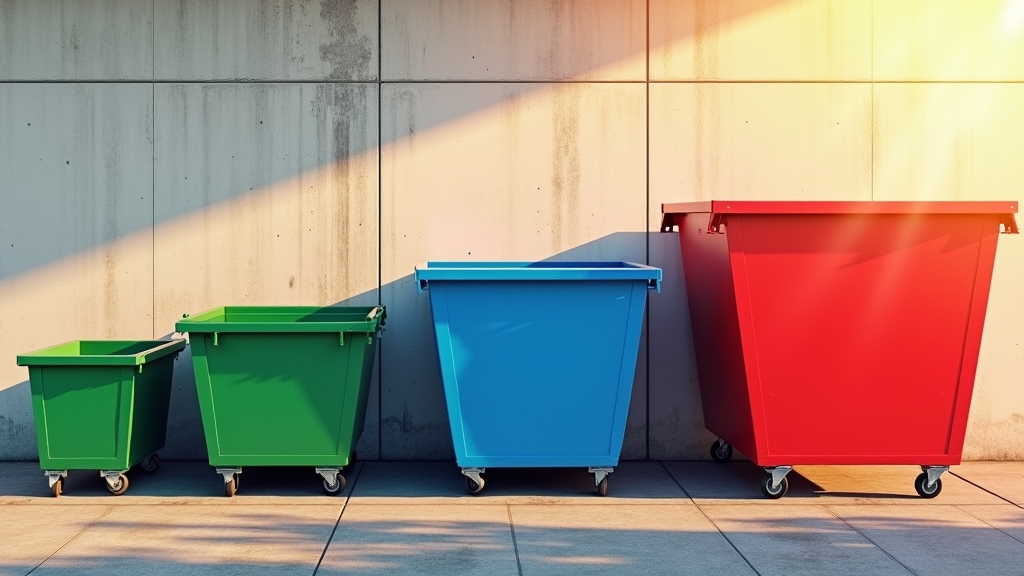
Many people assume that all dumpsters come in a uniform size, but this is a misconception.
In reality, dumpsters are available in various sizes to accommodate different project needs, from small residential cleanouts to large commercial renovations.
Selecting the right size is essential to guarantee efficiency and cost-effectiveness in waste management.
Various Size Options Available
The misconception that all dumpsters are the same size can lead to significant challenges during waste disposal projects.
In reality, dumpsters come in a variety of sizes tailored to different needs, ranging from small 10-yard containers ideal for residential cleanouts to large 40-yard units suited for commercial construction sites.
Each size accommodates varying volumes of waste, ensuring that users can select the best option for their specific project requirements.
Understanding the available sizes is essential, as using an improperly sized dumpster can result in either insufficient capacity or unnecessary costs.
Choosing the Right Size
Selecting the appropriate dumpster size is a common challenge for individuals and businesses planning waste disposal projects. Contrary to the myth that all dumpsters are the same size, they come in various dimensions to accommodate different volumes of waste.
Common sizes include 10, 20, 30, and 40 cubic yards, each designed for specific applications ranging from small home renovations to large construction sites. Choosing the right size is vital; an oversized dumpster can lead to unnecessary costs, while an undersized option may necessitate additional rentals.
Careful assessment of the project’s waste type and volume is important to make an informed decision. Understanding these distinctions guarantees efficient waste management and contributes to overall project success.
Myth 3: I Can Dispose of Anything in a Dumpster
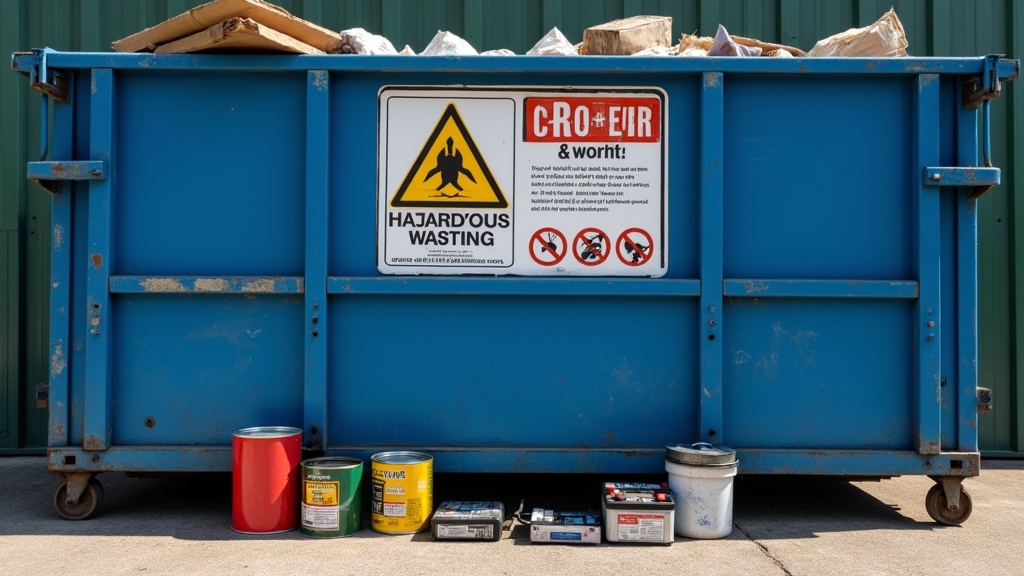
Many individuals mistakenly believe they can dispose of any item in a dumpster, but this is not the case.
Each dumpster rental service has a restricted materials list that outlines prohibited items, which often includes hazardous waste governed by strict regulations.
Additionally, local disposal guidelines must be followed to guarantee compliance and safety.
Restricted Materials List
While it might seem convenient to dispose of any unwanted items in a dumpster, there are strict regulations regarding what can and cannot be thrown away. Most dumpster rental companies maintain a restricted materials list to guarantee compliance with local, state, and federal regulations.
Commonly prohibited items include hazardous waste, electronic waste, tires, appliances containing refrigerants, and medical waste. Improper disposal of these materials can result in significant fines and environmental harm.
Additionally, violations may lead to increased costs for the renter, as companies often assess fees for non-compliance. Understanding and adhering to the restricted materials list is essential for responsible waste management and contributes to a more sustainable approach to disposal practices.
Hazardous Waste Regulations
Understanding the restrictions on materials is essential, particularly when it comes to hazardous waste regulations. Many individuals erroneously believe they can dispose of any item in a dumpster, but this can lead to serious legal and environmental repercussions. Hazardous waste, such as chemicals and electronic waste, requires special handling and disposal methods.
| Type of Waste | Disposal Guidelines |
| Household Chemicals | Must be disposed of at designated facilities. |
| Electronic Waste | Requires recycling at certified e-waste centers. |
| Medical Waste | Must be handled by licensed medical waste companies. |
Failure to comply with these regulations can result in fines and damage to the environment, emphasizing the importance of understanding proper disposal practices.
Local Disposal Guidelines
What misconceptions surround the use of dumpsters for disposal? Many individuals mistakenly believe they can dispose of any material in a rented dumpster without consequence.
However, local disposal guidelines strictly regulate what can and cannot be placed in these containers. Common restrictions include hazardous materials such as chemicals, tires, appliances, and certain electronic waste.
Violating these regulations can lead to hefty fines and environmental damage. It is vital for renters to familiarize themselves with local ordinances to guarantee compliance and responsible disposal.
In addition, many rental companies provide specific lists detailing acceptable items, aiding in adherence to regulations. Understanding and following these local disposal guidelines is essential for a successful and lawful dumpster rental experience.
Myth 4: I Don’t Need a Permit for a Dumpster
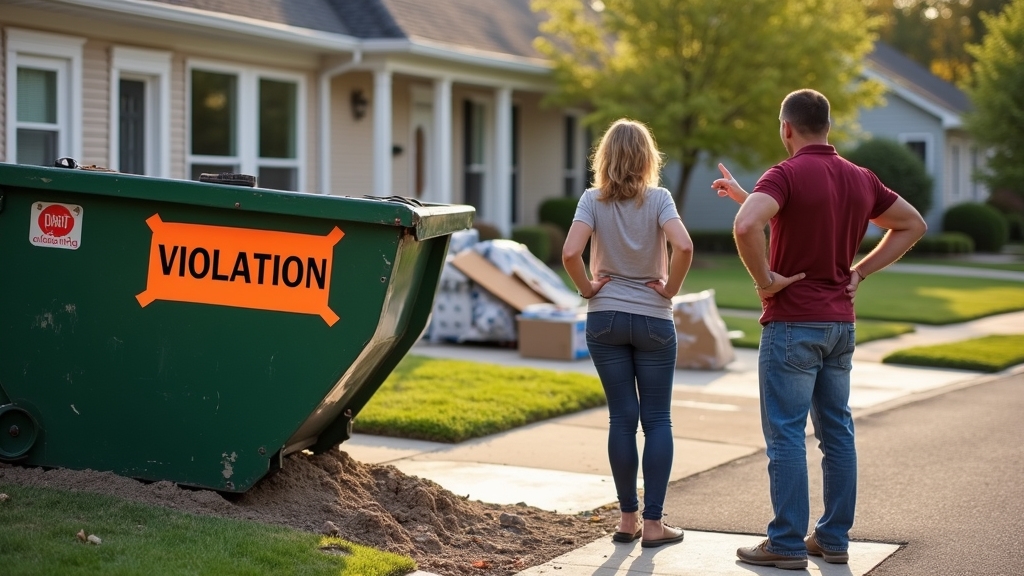
Many people mistakenly believe that a permit is unnecessary when renting a dumpster, but this assumption can lead to complications.
In many municipalities, placing a dumpster on public property or in a right-of-way requires a permit to guarantee compliance with local regulations. Failure to obtain the necessary permit can result in fines, removal of the dumpster, and potential legal ramifications.
In many areas, a permit is essential for placing a dumpster on public property to avoid fines and legal issues.
Additionally, permits often stipulate specific guidelines regarding placement, duration, and size, which must be adhered to for safe and lawful disposal practices.
As a result, it is imperative for individuals and contractors to verify local requirements before initiating a rental. By doing so, they can avoid unnecessary disruptions and guarantee a smooth waste management process throughout their project.
Myth 5: Dumpsters Are Only for Construction Projects
Contrary to popular belief, dumpsters are not exclusively reserved for construction projects. They serve a broader purpose and can be utilized in various contexts. Understanding the diverse applications of dumpsters can enhance their utility considerably.
Consider the following scenarios where dumpsters are beneficial:
- Home Renovations: During kitchen or bathroom remodels, dumpsters facilitate the disposal of old fixtures and materials efficiently.
- Cleanouts: Estates, attics, or garages undergoing decluttering require dumpsters to manage unwanted items systematically.
- Events: Large gatherings, such as festivals or community events, often necessitate dumpsters to handle substantial waste generated.
Recognizing these diverse uses debunks the myth that dumpsters are limited to construction, promoting smarter waste management solutions across various sectors.
Myth 6: I Can Keep the Dumpster as Long as I Want
Many people mistakenly believe they can keep a rented dumpster indefinitely.
However, rental agreements typically come with set time limits, and exceeding these can result in additional fees.
Understanding these terms is essential to avoid unexpected costs and guarantee proper waste management.
Rental Time Limits
How long can a dumpster be kept on a property without incurring additional fees? Rental time limits vary by provider and location, but generally, they are not as flexible as many believe.
Typically, the following guidelines apply:
- Standard Duration: Most rentals allow a period of 7 to 14 days.
- Extension Options: Some companies offer extensions, often for an additional fee, but this must be arranged in advance.
- Local Regulations: Municipal laws may impose stricter time limits that must be adhered to.
Understanding these time constraints is essential for effective project planning. Overstepping these limits could lead to unexpected costs and disruptions, emphasizing the importance of clear communication with the rental service.
Additional Fees Apply
Although some individuals might assume that keeping a dumpster indefinitely is an option, this belief is often misguided. Rental agreements typically include specific time limits, and exceeding these can lead to additional fees.
Dumpster rental companies operate under strict schedules to accommodate multiple clients; hence, prolonged use can disrupt their operations. Customers are often charged daily or weekly for extended rentals beyond the agreed-upon timeframe.
Additionally, these fees can escalate quickly, negating the initial savings of the rental. To avoid unexpected costs, it is vital for renters to understand the terms of their rental agreement and plan their projects accordingly.
Awareness of these potential charges promotes responsible usage and guarantees a smoother rental experience.
Myth 7: It’s Difficult to Rent a Dumpster
Renting a dumpster is often perceived as a complicated process, but this belief is largely unfounded.
Renting a dumpster is easier than many believe; the process can be simple and straightforward.
The reality is that securing a dumpster is straightforward and can be accomplished in a few simple steps:
- Identify Your Needs: Determine the size and type of dumpster required based on the volume of waste.
- Contact a Provider: Reach out to a reputable dumpster rental company, which often has user-friendly websites and customer service to assist.
- Schedule Delivery: Arrange for delivery at a convenient time, ensuring the site is accessible for placement.
With these steps, individuals can efficiently navigate the rental process, dispelling the myth that it is inherently difficult.
Mastery of this process can lead to a seamless waste management experience.
Myth 8: You Can Only Rent Dumpsters in Major Cities
Many people mistakenly believe that dumpster rental services are exclusive to major urban areas, yet this is far from the truth.
Dumpster rental companies operate in a wide range of locations, including small towns and rural communities. These services are designed to cater to various needs, from residential cleanouts to construction projects, regardless of geographical constraints.
Many providers offer flexible rental options and delivery services that reach clients even in less populated regions. Accessibility to dumpster rentals is essential for waste management, and companies recognize the importance of serving diverse populations.
As a result, individuals in suburban and rural areas can also benefit from convenient and reliable dumpster rental services, debunking the myth that such options are limited to metropolitan environments.
Myth 9: Dumpsters Are Only for Commercial Use
A common misconception is that dumpsters are solely intended for commercial use, overshadowing their utility for residential purposes.
In reality, homeowners frequently benefit from dumpster rentals, especially during significant projects. The following scenarios illustrate their residential application:
- Home Renovations: Major renovations, such as kitchen or bathroom remodels, generate substantial waste that requires efficient disposal.
- Spring Cleaning: Seasonal cleaning or decluttering often results in a large volume of items needing disposal, making a dumpster a practical solution.
- Yard Work: Landscaping projects, including tree removals or garden renovations, can produce considerable debris, making a dumpster essential for efficient cleanup.
Recognizing this versatility allows homeowners to utilize dumpster rentals effectively, promoting cleaner and more organized living spaces.
Myth 10: All Rental Companies Have the Same Policies
Although it may seem that all dumpster rental companies operate under the same guidelines, notable variations in policies can exist.
Different companies may offer diverse rental terms, pricing structures, and weight limits. For example, some may charge extra fees for overages, while others offer flat rates inclusive of all costs.
In addition, accepted materials can vary considerably; certain companies may prohibit hazardous waste, while others have more lenient policies.
Additionally, delivery and pick-up schedules can differ, impacting project timelines.
Customers seeking to maximize value and guarantee compliance should carefully review the policies of each company. Understanding these differences is essential in making an informed decision when selecting a dumpster rental service that meets specific project needs.
Frequently Asked Questions
How Do I Choose the Right Dumpster Size for My Project?
To choose the right dumpster size, assess the volume of waste generated, consider the project’s scope, and consult size guides provided by rental companies. Proper planning guarantees efficient disposal and prevents unnecessary costs or delays.
What Items Are Prohibited From Being Placed in a Dumpster?
Prohibited items typically include hazardous materials, electronics, tires, batteries, appliances with refrigerants, and medical waste. Each dumpster rental service may have specific restrictions, so reviewing guidelines is essential to guarantee compliance and safety.
How Long Does It Take to Get a Dumpster Delivered?
Typically, dumpster delivery takes between one to three business days after the order is placed. However, this timeframe can vary based on location, availability, and the specific service provider’s scheduling capabilities. Prompt communication is essential.
Can I Move a Dumpster Once It’s Been Delivered?
Moving a dumpster after delivery is generally not permitted. Doing so can cause damage or create safety hazards. It is advisable to consult the rental company for guidance and guarantee compliance with regulations before attempting relocation.
What Payment Methods Are Accepted for Dumpster Rentals?
Most dumpster rental companies accept various payment methods, including credit and debit cards, electronic bank transfers, and sometimes cash. Customers should inquire in advance to guarantee their preferred payment option is accepted during the rental process.
Final Thoughts
In conclusion, understanding the facts about dumpster rentals helps dispel common myths that often prevent people from making the most of this convenient and cost-effective waste management solution. Dumpster rentals are not just for construction sites—they’re perfect for home renovations, yard cleanups, community events, and more. By recognizing the true costs, understanding size options, and following proper disposal regulations, both homeowners and businesses can streamline their cleanup efforts efficiently and safely.
When you’re ready to experience hassle-free dumpster rental service, turn to Sterling Heights Dumpster Rental — your trusted local expert in professional waste removal. We offer a full range of options including roll-off dumpsters, residential dumpsters, commercial dumpsters, and construction dumpsters to fit every project size and budget.
Our team proudly serves Sterling Heights and surrounding areas like Rochester Hills, offering fast delivery, flexible scheduling, and transparent pricing.
Ready to debunk the myths for good? Contact us or call 586-666-0260 today to get your free quote and discover why Sterling Heights Dumpster Rental is the go-to choice for affordable, reliable dumpster rentals in Michigan.